
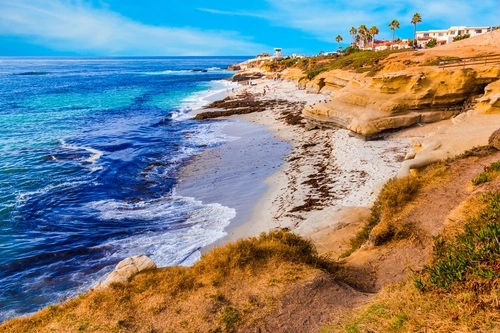
For years, sea-level rise and coastal erosion were often discussed as long-term planning issues. In parts of California, they are now immediate real estate and infrastructure problems. This week’s Los Angeles Times article, It’s time to rethink our relationship with the California coast, quotes the UCLA Coastal Flood Lab that “We’re likely going to break a number of water level records…. It’s not implausible to see some of the piers wiped out, or breakwaters or jetties.”
San Clemente is a good example. In September, severe waves and high tides forced another ...


California’s agricultural lands face constant pressure from residential, commercial, and industrial development. One of the state’s primary tools for preserving farmland and open space is the Williamson Act, formally known as the California Land Conservation Act of 1965. Unlike conservation easements, which are often permanent, Williamson Act contracts provide a mechanism for landowners to temporarily restrict development in exchange for favorable property tax treatment.
For landowners, public agencies, and eminent domain practitioners, understanding how these ...

With the recent rains, an upcoming El Nino winter, and rising high tides, property owners and public agencies in California are experiencing and preparing for property damage associated with floods, mudslides, high tides, and other water intrusion events. When that damage occurs, the next question is typically who is responsible – is it simply an extreme weather event or natural disaster, is there insurance coverage, or is a public agency responsible? The concept of inverse condemnation has become a new theme in these types of matters. But when does inverse condemnation apply ...

Arizona eminent domain cases often turn on appraisal opinions – market value, highest and best use, severance damages. For years, practitioners and the courts have operated under the assumption that most defects in valuation testimony went to weight, not admissibility. That approach has come under fire. Recent amendments to Rule 702, Arizona Rules of Evidence, and federal and state court decisions have put more teeth into the courts’ gate-keeper role. These developments provide practitioners with valuable tools for keeping unreliable opinions from reaching Arizona ...

Some of the biggest real estate disputes I’ve handled have started with a document that may be only a few paragraphs long: an easement. Easements are everywhere. Utilities use them for pipelines and transmission lines. Developers rely on them for access and infrastructure. Property owners inherit them when they buy property. And they’re often ignored—until somebody wants to do something the other side doesn’t like. And in eminent domain proceedings, public agencies and utilities oftentimes pay little attention to the easement terms or how broad or narrow they’ve ...

In Wang v. Peletta, the California Court of Appeal held that property owners cannot acquire a prescriptive easement to maintain an encroaching structure if that structure was built without required permits and constitutes an abatable public nuisance.
In Wang, homeowners built a retaining wall and related improvements without first obtaining the required permits or a survey. They believed the work was on their own property, but it actually encroached significantly onto their neighbor's land. The county later issued citations to the homeowners requiring correction of the code ...

We recently reported on the California Legislature’s passage of Senate Bill 1153, noting that the Bill was waiting for Governor Newsom’s approval. That approval has now occurred, and the Bill is official.
This is a huge legislative victory for water suppliers in California, as the Bill clarifies that public water systems have no duty to be designed, constructed, or maintained for wildfire defense or suppression—and that the inability to maintain water supply or pressure during a wildfire is not a substantial cause of wildfire damages. Together, these authorities provide an ...

I’ve spent most of my career practicing in a relatively narrow corner of the law: eminent domain, inverse condemnation, and real estate litigation. That wasn’t necessarily the plan when I went to law school, but eminent domain chose me – I didn’t choose it. I’ve always been drawn to real estate—how property is used, what gives it value, and how seemingly small differences in location, access, zoning, improvements, or highest and best use can dramatically affect that value. Eminent domain cases bring all those issues together in a way that is both challenging and endlessly ...

Understanding the acquisition and condemnation process is essential to the successful delivery of infrastructure and public projects. Whether you're new to the right of way profession or simply looking for a refresher, join us for our upcoming webinar, "An Introduction to the Right of Way Acquisition and Condemnation Process," on October 6, 2026.
In our work representing public agencies and other project stakeholders, we regularly see how important it is for project teams to have a clear understanding of the acquisition and condemnation process. While right of way acquisition ...

When people think about eminent domain disputes, they usually think about appraisers, lawyers, depositions and trials. But I’ve found that many times the greatest impact on the ultimate cost of a case happens long before anyone files a complaint. That is true for both sides. For public agencies and utilities, an early project or acquisition decision can unintentionally create a much larger compensation claim. For property owners and developers, failing to understand the impact of a proposed acquisition early can mean losing opportunities to protect the property or improve the ...
Eminent Domain Report is a one-stop resource for everything new and noteworthy in eminent domain. We cover all aspects of eminent domain, including condemnation, inverse condemnation and regulatory takings. We also keep track of current cases, project announcements, budget issues, legislative reform efforts and report on all major eminent domain conferences and seminars in the United States.
Stay Connected
 RSS Feed
Categories
- Administration
- Appraisal
- Arizona
- California
- California
- CLIMATE CHANGE
- CONGRESS
- Construction
- Court Decisions
- Energy & Utilities
- Environmental Law
- EPA
- Events
- FAQs
- Goodwill
- GOVERNMENT ADMINISTRATION
- Inverse Condemnation & Regulatory Takings
- Land Use Planning
- Lawsuit
- Legal Developments
- Nevada
- New Legislation
- Policy Shifts
- Possession
- Projects
- Public Agency Law
- Public Agency Law
- Public Policy
- Publications
- Real Estate and Property Rights
- Redevelopment
- Regulatory Reform and Proposed Rules
- Right to Take
- Right-of-Way
- Risk Management
- Seminars
- Speaking Engagements and Presentations
- Texas
- trial
- Utility Regulation
- Valuation
- Videos
- Washington State
- Water
- Water Law
- Wildfire Management
